Names on the Shirt, Diesel in the Van: A Saturday With Ayrshire’s Small Sponsors
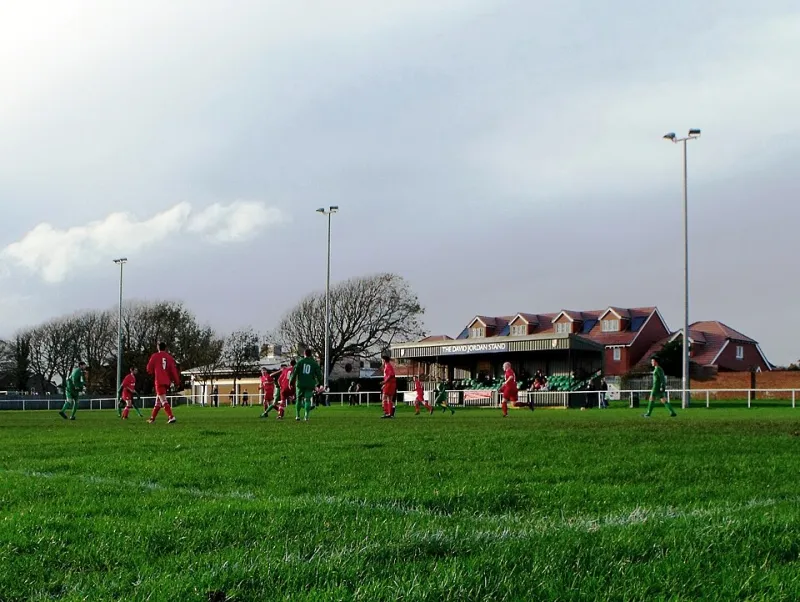
Photo: grassrootsgroundswell, CC BY 2.0, via Wikimedia Commons
There is a moment before every Ayrshire matchday when the ground looks less like sport and more like a small-business directory with grass. Sponsor boards lean against the fence. A van with a joinery logo on the side is parked where the visitors’ bus should be. Someone is testing the PA with a chip-shop jingle. The shirt sponsor’s name is already stretched across the middle of the warm-up tops, and the match ball is carrying a garage’s phone number around the centre circle.
It is easy to walk past all of this. But the names on the shirts, the boards and the balls are not decoration. They are the quiet funding line that keeps semi-pro and grassroots football in Ayrshire breathing. So this is a Saturday spent looking at the people behind the logos — not from a corporate hospitality box, but from the touchline, the tea hatch and the car park.
The Board by the Gate
The first sponsor you meet is usually the one who fixed the gate. Or the one who supplied the fencing. Or the one who did the electrics in the clubhouse when the lights kept tripping. Ayrshire clubs are good at turning practical help into partnership, and small firms are good at saying yes when the ask is concrete.
A Kilmarnock scaffolder puts it plainly: sponsorship is not an advertising campaign, it is a local subscription. He knows the club treasurer. He knows the under-18s coach. He has stood on the same touchline in the same weather. When he writes a cheque, he is not expecting a measurable uplift in scaffold enquiries. He is expecting the club to still be there in five years.
That does not mean there is no calculation. Margins in trades are tight enough to hear them squeak. Fuel, insurance, wages, materials, the van that needs new tyres before winter. A shirt sponsorship is a real cost. The difference is that the cost is weighed against something less formal than return on investment: reputation, goodwill, the knowledge that half the team has probably done a shift for him at some point.
A Margin Tight Enough to Hear It Squeak
Ask a small sponsor what they get back and the answers arrive in odd shapes. A mention on social media. A logo on a fixture poster. Two tickets for a sportsman’s dinner. A photo with the squad that ends up on the wall of the office. None of it balances a spreadsheet on its own.
But Ayrshire is a place where business and community overlap without much ceremony. The plumber who sponsors the away kit is also the plumber who gets a call when the boiler in the changing room dies. The printer who does the matchday programme gets the club’s stationery order. The café that feeds the volunteers gets a steady Saturday trade it can actually predict.
The clever clubs understand this. They do not treat sponsors as distant benefactors. They treat them as neighbours who have bought into the same Saturday. That means inviting them to the game, tagging them properly, putting their board where it can actually be seen, and not asking them to pay for the privilege of being ignored.
The Chip Shop Ledger
Then there is the chip shop. Every Ayrshire town has one within walking distance of a ground, and every one of them has a different relationship with the club. Some sponsor the match ball. Some put a team photo in the window. Some simply stay open later on a Saturday because they know the final whistle brings a rush.
The chip shop does not measure its return in impressions. It measures it in footfall. If the club’s committee meeting ends at nine, that is six suppers. If the under-16s come back from an away trip cold and hungry, that is a queue. If the first team wins, the queue is louder. If they lose, the queue is still there, just quieter and more philosophical.
That is the honest version of grassroots sponsorship. It is not a marketing strategy with a logo on top. It is a local business deciding that the club is part of the town’s rhythm, and that the town’s rhythm is worth supporting even when the numbers are not glamorous.
When the Sponsor’s Van Is Also the Minibus
The best story is not the cheque. It is the van. On a Saturday morning, a sponsor’s van might be collecting nets, dropping flags at the ground, taking a player to the station or ferrying a kit bag across the county. By the afternoon it is parked behind the goal with a logo facing the pitch. By the evening it is giving someone a lift home.
That overlap is the real Ayrshire sponsorship model. The business is not separate from the club. It is woven through the matchday. The sponsor knows the left-back’s dad. The left-back’s dad did the tiling in the sponsor’s shop. The club secretary has both numbers saved in the same phone.
This is also where sponsorship becomes fragile. When a small firm has a bad quarter, the first thing to go is the nice-to-have. A club that has built its budget around one generous backer can find itself exposed. The healthier clubs spread the load: a shirt sponsor here, a board sponsor there, a match ball sponsor, a pitch-side sign, a race night table, a raffle prize. None of it is huge. All of it is useful.
What the Club Can Actually Give Back
Clubs cannot promise a small sponsor a wave of new customers. They can promise something more realistic: a place in the local story. A well-run club thanks its sponsors by name, puts them in front of people who might actually use them, and makes sure the relationship is not just a direct debit.
The Ayrshire Bulls lens is useful here. Grassroots sport is not a charity case and it is not a billboard. It is a meeting point. The scaffolder, the chip shop, the garage and the printer are all part of the same Saturday economy. When they back a club, they are backing a version of the place they live in.
The Quiet Renewal
By full-time, the boards are still leaning against the fence and the van is still in the car park. Someone is folding the nets. Someone else is counting the takings from the tea hatch. The sponsor’s logo is slightly muddier than it was at kick-off.
And next season, if the club asks again, there is a decent chance the answer will be yes. Not because the spreadsheet says so. Because the van is already booked, the chip shop is already open, and the club is already part of the week. That is how Ayrshire’s grassroots backers keep the game moving — one tight margin, one match ball and one lift home at a time.