The Lonely Middle: Ayrshire's Teenage Whistlers and the Saturday Shortage
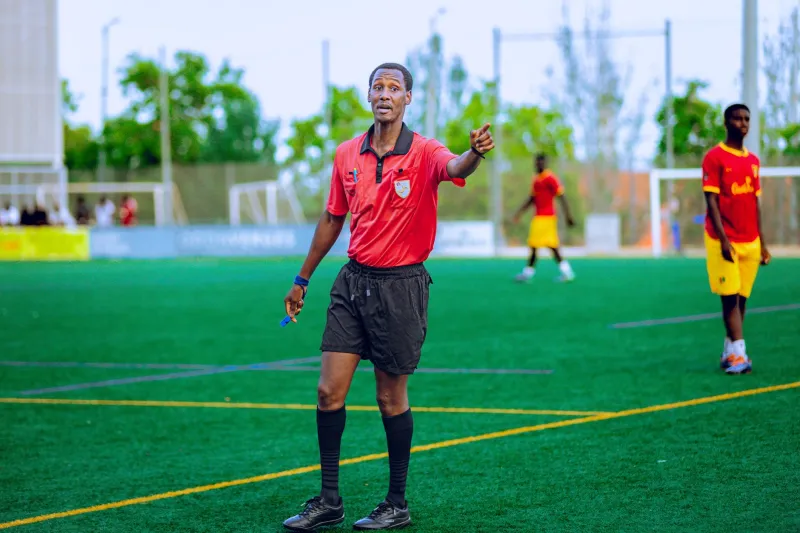
There is a particular sound to a Saturday morning in Ayrshire. It is not the crunch of a tackle or the shout of a coach. It is the lonely peep of a whistle from a referee who is often younger than some of the players he or she is trying to keep in line.
Across the county, from the windswept parks of Largs to the tight pitches behind Ayr, the shortage of grassroots referees has become a quiet crisis. Fixtures are being moved, kick-offs are being shifted, and club secretaries are spending Friday nights on the phone rather than folding the kit. The people plugging the gaps are increasingly teenagers — some still playing youth football themselves, some barely old enough to drive to the ground.
The Friday night phone call
Ask any club secretary in Ayrshire what their least favourite part of the week is and many will say the same thing: chasing a referee. The problem is not a lack of willing volunteers in general. It is a lack of qualified whistlers who can give up three hours on a Saturday, often for expenses that barely cover the fuel.
"We had a spell last season where we genuinely thought we'd have to call the game off because we couldn't get a ref," says Elaine, secretary of a grassroots club near Kilwinning. "You're ringing round, begging, offering to pay a bit more, and all the time you've got 30 players and their families expecting a game. It's a horrible feeling."
The reasons are familiar. Abuse from the touchline. The cost of courses. The time commitment. The fact that a 16-year-old can be shouted at by a 40-year-old who has had a few cans before kick-off. And the simple reality that refereeing is not always seen as a route worth taking when you could be playing, coaching or simply having a lie-in.
The teenagers in the middle
Yet there are young people stepping forward. Sophie, a 17-year-old referee from Irvine, started whistling at 15 after an injury kept her out of playing. She now does youth games midweek and men's amateur football on Saturdays.
"The first few games I was terrified," she says. "I was more nervous about getting a decision wrong than any player was about losing. But you learn quickly that most of the time nobody remembers the throw-in you got wrong in the 12th minute. They remember if you were fair and if you spoke to them like people."
Sophie is one of a small but growing number of teenage officials in Ayrshire. Local leagues and the regional football association have been running taster sessions and subsidised courses, often targeting players who are coming out of youth football. The idea is simple: if you already know the game, you are halfway there. The other half is confidence, positioning and the thick skin that no course can really teach.
"We need to make refereeing feel like a normal thing for a young person to do," says David, an experienced official from Ayr who now mentors new whistlers. "When I started, there was a bit of a drinking club feel to it. Now it's more professional, but it can be lonely. A 16-year-old turning up at a ground on their own, with no one to talk to before the game? That's where clubs can help."
Not just a football problem
The referee shortage is not unique to football. Rugby, hockey and basketball in Ayrshire all struggle to find officials for grassroots fixtures. But football is the most visible, and the touchline behaviour is the most stubborn. A single bad afternoon can put a young ref off for good.
At one under-16s game in Prestwick earlier this season, a teenage referee abandoned the match after repeated comments from a small group of adults. The club involved later issued an apology, but the damage was done. The referee has not taken another game since.
"That's the thing people don't see," says Elaine. "They think it's just a bit of banter. But a 16-year-old doesn't hear banter. They hear a grown man telling them they're useless. And then we wonder why we can't get refs."
What actually helps
There are practical fixes, and most of them cost nothing. Clubs can appoint a matchday liaison whose job is to welcome the referee, show them where to change and check they are okay before and after the game. A simple "thanks for coming" goes further than a lot of clubs realise.
Leagues can introduce silent weekends for youth fixtures, where spectators are asked to keep noise to applause only. The Ayrshire Amateur Football Association has been trialling a code of conduct that puts responsibility on the home club to manage touchline behaviour. Early feedback is positive, though enforcement remains patchy.
For young referees, mentoring matters. Pairing a new whistler with an experienced official for their first five games — even just for a phone call the night before — can make the difference between a hobby and a one-off. Travel expenses need to be realistic too. A 17-year-old driving from Girvan to Stewarton is not doing it for the love of the £30 fee.
The road ahead
Nobody expects the shortage to disappear overnight. But there is a sense that the conversation is shifting. More clubs are talking about behaviour. More young people are seeing refereeing as a way to stay in the game. And more experienced officials are putting their hand up to mentor rather than just moan about standards.
The whistle at the end of the road is still there. It is just being blown by someone younger than before. How Ayrshire treats that person — on the touchline, in the car park, in the clubhouse after the game — will decide whether they come back next Saturday. And whether the rest of us have a game to watch at all.