Six Bus Stops, Six Teapots: What Ayrshire Learns When the Bulls Are Away
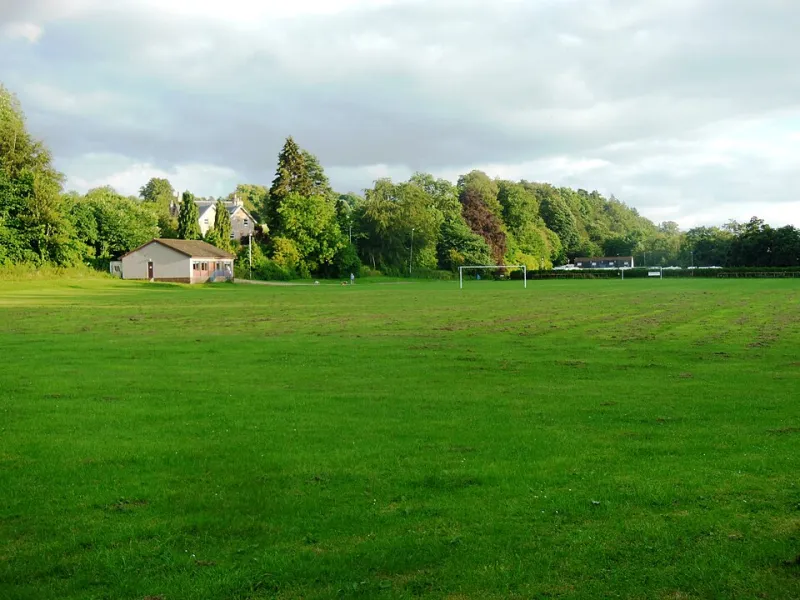
Photo: Bill Henderson , CC BY-SA 2.0, via Wikimedia Commons
There is a particular sort of Ayrshire Saturday that starts with a flask, a folded fixture list and the quiet hope that the bus driver knows the back road to the ground. In 2026, I followed the Bulls to six away fixtures. Not because I am a tactical genius — I am not — but because I wanted to see what happens when the Bulls are the visitors. Away days are a social audit. They tell you what a town thinks of strangers, how it treats guests, and whether the tea urn has been switched on before the gates open.
The Flask Rule
Every away day begins with a questionable flask. Mine is green, scratched and older than some of the players. The rule is simple: it does not come out before the second traffic light, and it is never opened in the car park of the home club. That would be rude. The flask is for the journey home, the quiet bit after the final whistle, when the conversation turns from the match to the traffic and the next fixture.
The flask also gives you something to do with your hands when the banter starts. And in Ayrshire, the banter always starts.
Beith: The Warm Welcome With a Side of Needling
The first trip of 2026 was Beith. The clubhouse was warm, the tea urn was already going, and someone had put out a plate of biscuits that looked like it had been arranged by a person with strong opinions about custard creams. The local greeting was a raised eyebrow and a line about us being a long way from home. It was gentle needling, the sort that says we are rivals but you are still allowed to stand here.
What Beith taught me is that Ayrshire rivalry is often a handshake with a smirk. You are judged less by your result and more by whether you say thanks for the tea and put your mug back on the tray. I put mine back. I am not an animal.
Kilwinning: The Pie Queue as Social Contract
Kilwinning was the second stop, and the pie queue was a lesson in local governance. Nobody pushed. Nobody sighed loudly. The volunteer behind the counter knew half the people in front of her by name and the other half by their order. I asked for a pie and a tea and was told, kindly but firmly, to wait my turn like everyone else.
The half-time ritual was lean-against-the-wall, cup in one hand, pie in the other, watch the queue and listen. Kilwinning teaches you that hospitality is not softness. It is a system. It works because people turn up and do their bit. Away fans are guests until they act otherwise, and the quickest way to stop being a guest is to leave your rubbish on the table.
Ardrossan: Wind, Chips and the Honest Touchline
Ardrossan brought the wind. It came off the harbour and made a mockery of the idea that a football match is best played on the ground. The touchline banter was excellent because the weather did half the work. A defender shouted something about the cold that I will not repeat in a family website, and a nearby supporter offered him a chip in sympathy.
The clubhouse tea afterwards was strong enough to strip paint, which is exactly what you want after ninety minutes of coastal weather. Ardrossan teaches you that the Ayrshire coast is not a scenic backdrop. It is a character in the match. Away fans who moan about the wind miss the point. You dress for it, you laugh at it, and you drink the tea.
Largs: Sea Air and the Slightly Fancy Biscuit
Largs was the surprise of the six. The clubhouse had custard creams. Not just Rich Tea. Custard creams. A small thing, but it changed the mood. The banter was gentler too, more of a we have seen your lot before than a warning shot across the bows. Someone told me a story about a flood in the 1980s that had nothing to do with football and everything to do with the town.
That is the thing about away days. You go for the match and come away with a history lesson. Largs taught me that not every away trip needs edge. Sometimes a biscuit and a story are enough. We still opened the flask on the way home, mind. It would have been rude not to.
Cumnock: The Long Haul and the Proper Boil
Cumnock was the long haul. The bus took the sort of route that makes you appreciate a full flask and a comfortable seat. By the time we arrived, the clubhouse kettle was doing overtime. A volunteer told me to sit down, son, you are making the place look untidy. I sat down. I am not proud of how quickly I obeyed.
The half-time ritual was a roll and sausage with brown sauce, eaten standing up because every seat was taken. The away support was smaller than at some grounds and louder for it. Cumnock teaches you that distance creates its own intimacy. When you have travelled that far, you share a table with the locals because there is no room not to.
Girvan: The Last Stop and the Quiet Debrief
Girvan was the last of the six. The clubhouse was quieter, the tea was hot, and the talk turned to the season as a whole. Nobody was pretending the match had been a classic. Nobody was pretending it had not mattered. The flask came out on the bus home and did its job.
What did Ayrshire learn about itself when the Bulls were the visitors? It learned that the grassroots game is held together by people who put out cups, sweep the changing rooms and take the mickey with equal care. It learned that clubhouses are not just rooms with kettles. They are the places where a town decides what kind of town it wants to be.
The flask is empty now. The fixture list has more names on it. And somewhere in Ayrshire, a volunteer is already wondering whether the tea urn needs a new washer before the next Saturday. That is the real away-day ritual. Long may it continue.