The Kit Bag Relay: Inside Ayrshire's Boot Banks and Hand-Me-Down Kit Drives
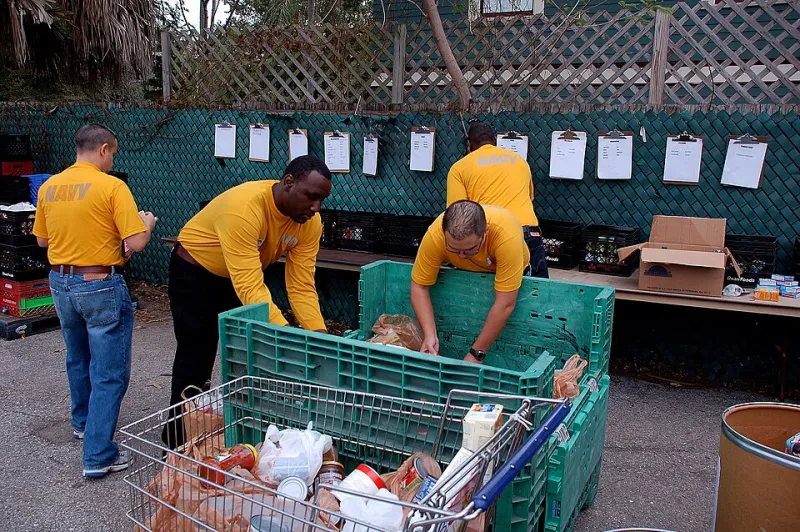
Photo: U.S. Navy photo by Mass Communication Specialist 1st Class Ruben Perez, Public domain, via Wikimedia Commons
There is a particular smell to a clubhouse on a Thursday night: disinfectant, faint deep-heat rub, and the ghost of a hundred teas. In Kilmarnock, one committee room has added a new note — rubber, boot polish and the sharp citrus of someone else's washing powder. It is sorting night for a kit-recycling drive that has quietly become one of the most useful things happening in Ayrshire grassroots sport this season.
The idea is simple enough. Players outgrow boots. Kids abandon training tops at the bottom of bags. Semi-pro lads clear out lockers and find three pairs of astro trainers they haven't worn since 2024. Instead of those things going to landfill or festering in a garage, they go to a clubhouse drop-off point, get checked, cleaned and labelled, then reappear on a trestle table on a Saturday morning for families who need them.
No fanfare. No means-testing. Just a relay of kit bags from one household to the next.
Why a pair of boots became a grassroots flashpoint
Anyone who has stood on a touchline in November knows the maths. A child's feet can go up half a size between the end of the summer holidays and the first frost. Boots that fitted in August are pinching by bonfire night. Astro trainers have been worn to death on 3G. Shin pads have gone missing, laces have snapped, and the waterproof jacket that was meant to last two winters is now a bit too tight across the shoulders.
At grassroots level, that is not a minor inconvenience. Club fees, subs, travel, raffle tickets and the weekly tuck shop add up. A decent pair of junior boots can cost £40 to £60; a full kit rebuild — boots, trainers, shin pads, training top, waterproof — can easily clear £100. In a household with two or three kids playing, that is a real decision, not a rounding error.
"We had a parent last winter who was genuinely choosing between new boots and putting the heating on for an extra hour," says Fiona, a youth coach in Ardrossan who helps co-ordinate one of the drop-off points. "She didn't say it in a dramatic way. She just said it. That's when you realise this isn't about tidiness or being green. It's about whether a kid turns up on Saturday feeling like they belong."
From the clubhouse door to the trestle table
The logistics are less glamorous than the idea. There are drop-off boxes at a handful of clubhouses across Ayr, Irvine, Kilwinning, Largs and Cumnock. Some are plastic storage crates with a laminated sign; one is an old laundry bin with a picture of a boot taped to the lid. Volunteers ask that donations arrive clean and paired, but they are realistic — plenty of bags arrive with one mud-caked sock and a mysterious single shin pad.
On sorting night, everything is emptied onto long tables. Boots are checked for split soles, broken studs and mould. Training tops are inspected for rips and washed if needed. Anything that would not be fit for the volunteer's own child does not go on the table. It is not a jumble sale; it is a hand-out with a bit of dignity attached.
"We don't want a scrum," says Callum, a semi-pro player who clears out his locker at the end of each season and helps with the Saturday hand-out. "People can come in, have a look, take what they need, and nobody is writing their name down. If a kid finds a pair of boots that fit and a top that isn't three sizes too big, that's the job done."
The Thursday night crew
The sorting crew is a mixed bag. There is a retired joiner from Cumnock who repairs loose studs with a seriousness usually reserved for listed buildings. There is a parent who brings a flask and a head torch. There is a teenager doing it for a volunteering badge, who has turned out to be ruthlessly efficient with a bin bag. And there is Fiona, who keeps a notebook with sizes, gaps and a running list of what is needed most.
That list is rarely glamorous. Adult smalls and medium training tops are useful. Junior boots in sizes 10 to 2 disappear fast. Goalkeeper gloves are gold dust. So are waterproof coats in any size, and plain black socks that do not look like they have been through a hedge backwards.
"People think we need the flashy stuff," Fiona says. "We don't. We need the boring stuff. Good socks. Decent laces. A coat that keeps the rain out. That's what makes a difference on a Tuesday night in February."
Why winter makes the relay urgent
Winter is the stress test. Pitches get heavy, boots split, and training moves under floodlights where the temperature drops faster than the ball. Families who were coping in September can suddenly find themselves short of a second pair of boots or a warm layer. The kit drive is not a substitute for proper club support or affordable pricing, but it takes the edge off.
It also does something less measurable. Turning up in ill-fitting gear is a quiet source of embarrassment for young players. A pair of boots that fit, even second-hand, can be the difference between a kid joining in and a kid hovering at the edge of the session. That is not a small thing in grassroots sport.
How to donate without creating a headache
If you are clearing out a kit bag this month, the volunteers have a few requests. Wash the tops first. Pair the boots. Check for broken zips and split soles before you donate. Do not leave bags outside a clubhouse in the rain. Ask the club where the drop-off point is and when someone will be there. And if you have time rather than kit, offer an hour on a Thursday night — sorting is the bit that always needs hands.
The scheme is now looking at adding a boot-check station at a couple of Bulls home fixtures in 2026, where families can bring boots for a quick stud and sole inspection. It is a small idea, but it fits the same logic as everything else in this drive: keep good kit moving, keep kids playing, and let the clubhouse do what it has always done best — look after its own.
On Saturday morning, the trestle table goes up at half nine. By ten, there is a steady trickle of parents and kids, some sheepish, some chatty, all leaving with something useful. A pair of boots goes out the door. A training top finds a new shoulder. The relay carries on.