After the Day Job: One Floodlit Thursday and the Ayrshire Clubs Keeping Winter Moving

Photo: floodlit amateur football pitch Scotland winter evening players and volunteers, via s.yimg.com
At 5.15pm on a Thursday in November, the light is already failing over the Ayrshire coast. The pitch looks flat and grey from the car park, a rectangle of nothing much waiting for somebody to throw a switch. Inside the pavilion, the kettle is on, the cash tin is out and a volunteer in a hi-vis jacket is trying to remember where the spare bulbs were left after the last home game.
This is the quiet hour of midweek football. Not the warm-up, not the team talk, not the crowd. The bit before all that, when a Thursday night fixture is still a set of jobs to be done.
The 5.15pm Bulb Check
The first job is always the lights. A club official walks the perimeter with a clipboard and a torch, checking the pylons one by one. Two corners are fine. One flickers for a second before settling. The far side, the one nearest the railway line, takes a couple of goes. Nobody panics. This is Ayrshire in November; everyone knows the drill.
Floodlit football has a different texture to a Saturday afternoon. The pitch feels smaller under lights, the shadows longer, the noise sharper. A shout from the touchline carries. A miscontrol sounds like a mistake. Players warm up in ones and twos, arriving straight from work with kit bags over their shoulders and that slightly hollow look of someone who has already done a full day.
One lad is a joiner and has come from a site near Kilmarnock. Another works in a care home and has swapped a shift to make it. The goalkeeper is a delivery driver who has spent the afternoon fighting the A77. None of them are complaining. They are just getting on with it, because Thursday night is the only night that works.
Day Jobs and the Thursday Shuffle
Ask any semi-pro or grassroots player in Ayrshire about midweek football and you will hear the same phrase: it is a stretch, but it keeps the season alive. Saturday remains the anchor. Saturday is when the crowds are bigger, the teas are hotter and the whole thing feels like the community event it is meant to be. But from late October through to February, Saturday alone cannot carry the fixture list. Waterlogged pitches, frozen surfaces and the sheer volume of games mean clubs need another way through.
So Thursday becomes the release valve. Not every club loves it. Not every player can do it. But for those who can, it is the difference between a season that keeps moving and one that stalls into a pile of rearranged fixtures and frustrated phone calls.
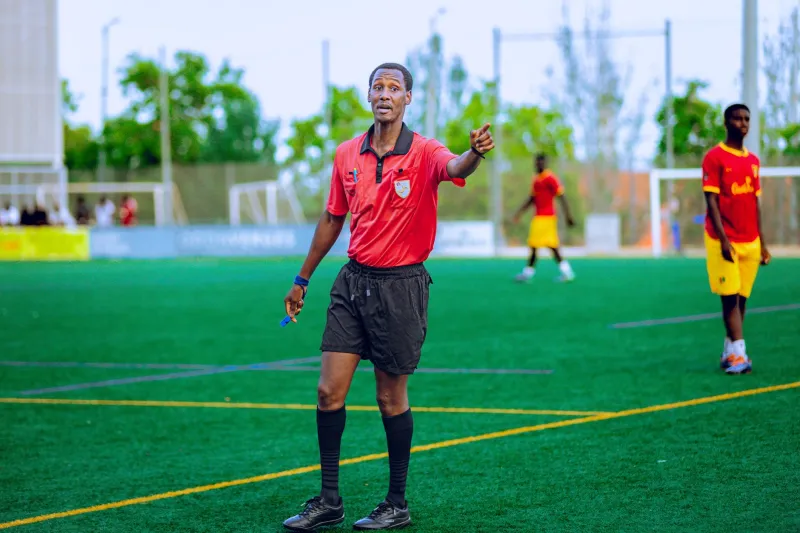
The players I speak to before kick-off are realistic. They know the manager wants a full squad. They know the volunteers have been there since half four. They know the referee has probably come from another job too. There is no glamour in it. There is, though, a kind of pride in getting there, getting changed and getting on with the game when the easier option would be to stay home.
The Gate, the Dark and the Tea Urn
By 6.30pm, the crowd starts to arrive. Not in droves. A hundred or so, maybe a little more, wrapped up in coats and hats, with a few kids running along the touchline and a dog that seems unsure about the whole enterprise. The gate volunteer has a headtorch, a cash box and a card reader that loses signal whenever a cloud passes overhead. Nobody minds. There is a queue of three and a bit of banter about the weather.
The tea hut does steady business. Soup, rolls, tea, coffee, and a tray of something that looks suspiciously like leftover baking from a club fundraiser. Under the lights, the hut glows like a small beacon. It is not a big crowd, but it is a proper one. The kind that knows the players by name and is not afraid to tell them so.
This is the part that gets lost in the debate about midweek football. Thursday night crowds are smaller, yes. But they are also more local, more familiar, more likely to be the people who will help put the goals away afterwards. The atmosphere is different, not worse. It is just closer to the bone.
Under the Lights
The game itself is scrappy and quick. The pitch is heavy in the middle. The ball skids. The first ten minutes are all effort and no shape, then it settles into something more recognisable. A few decent passes, a couple of crunching tackles, a shout from the bench that echoes around the ground. The floodlights pick out the steam coming off the players at half-time.
You can see why clubs keep doing it. There is something about football under lights that still works on people. The players feel it. The crowd feels it. Even the volunteer on the gate, who has been standing in the cold since half five, looks up when a shot goes close. It is not Saturday. It is not meant to be. But it is football, live, on a Thursday in Ayrshire, and that counts.
The Full-Time Ledger
By 9.40pm, the final whistle has gone, the teams have shaken hands and the real work starts. Goals come down. Nets come off. The tea urn is emptied. The gate volunteer counts the takings and finds that the card reader has finally picked up a signal. The manager is already talking about Saturday.
Is Thursday night football a winter lifeline or an unsustainable stretch? The honest answer is both. It keeps the season moving, gives players games and brings people together when the weather wants to keep them apart. It also asks a lot of the same volunteers who are already doing too much, and it asks players to be at their best after a full day at work.
Ayrshire clubs are good at making it work. That does not mean it is easy. It means they are used to finding a way, flicking the switch, filling the urn and hoping the bulbs hold out for another week. On a cold Thursday in November, that feels like enough.