The Last Volunteer: Confessions of Ayrshire's Emergency Goalkeepers
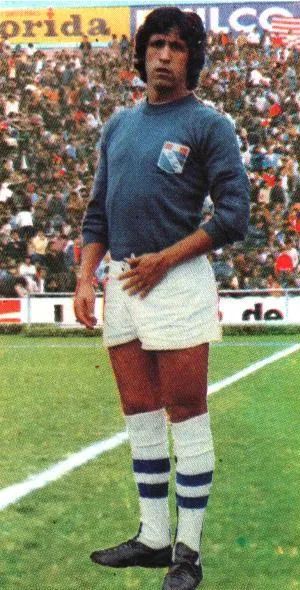
Photo: Unknown authorUnknown author, Public domain, via Wikimedia Commons
There is a particular kind of Saturday morning text message that can turn a calm Ayrshire changing room into a scene from a disaster movie. It usually arrives before the strips are even out of the bag. The regular goalkeeper is stuck, the reserve keeper is working, and the third name on the list is somebody's cousin who once played in goals for a school team in 2014.
That is when the question goes round: who fancies it?
The 9:17am Text
'You don't volunteer for it,' says Danny, a 34-year-old centre-half from Kilwinning who has spent more Saturdays in goals than he would like to admit. 'You get nominated. Somebody says your name, everybody laughs, and then the manager looks at you with that face. Next thing you know, you're borrowing gloves off the other team.'
The emergency goalkeeper is one of the least glamorous figures in Ayrshire football. They are not signed as keepers. They do not train with the goalkeeping coach, if there is one. They spend most of the week heading and tackling, then find themselves on a cold November morning trying to remember whether they are supposed to stand on the near post or the far one.
And yet, across semi-pro and grassroots clubs in Ayr, Irvine, Saltcoats, Cumnock and everywhere in between, these accidental last lines keep Saturdays alive.
Borrowed Gloves and the Warm-Up That Wasn't
The first problem is equipment. Proper goalkeeper gloves are personal things. They are broken in, taped up, and often smell like a mixture of rubber and regret. Borrowing a pair is like borrowing somebody else's boots — technically possible, rarely comfortable.
Callum, a 19-year-old winger at an Irvine amateur side, got the nod earlier this season when both keepers were unavailable. He spent the first ten minutes of the warm-up being lobbed by his own team-mates while wearing a pair of gloves two sizes too big.
'I couldn't grip the ball,' he says. 'Every catch was a coin toss. The lads were hitting shots from the halfway line and I was just trying to look confident. I think I shouted "keeper's" once and it came out like a question.'
The warm-up is usually where the reality sets in. Outfield players are used to short bursts, not the strange loneliness of goals. There is no hiding. Every mistake has a consequence, and every consequence has a witness — usually a team-mate who will remind you about it in the pub for the next six months.
Facing a Mate from Twelve Yards
There is also the etiquette of the penalty. If an emergency keeper concedes one, the taker is often somebody they know. A former team-mate. A neighbour. The guy who runs the local barber's. There is no manual for that.
'You try not to look at them,' says a veteran striker from a Cumnock side who once went in goal for the last twenty minutes and saved a penalty. 'I knew the boy taking it. He was trying to keep a straight face. I was trying to remember which way he usually went. In the end, I just stood still and he hit it straight at me. I've never been hugged so hard by a centre-half in my life.'
The strange etiquette cuts both ways. Emergency keepers are not supposed to be too good, because that would be embarrassing for everyone. They are not supposed to be too bad, because that would be embarrassing for them. The sweet spot is a few decent saves, one moment of chaos, and a final whistle that arrives before the situation gets out of hand.
What It Says About Squad Depth
For managers, the emergency keeper is a symptom of something bigger. Squad depth in Ayrshire football is a fragile thing. Players work shifts, have families, pick up injuries, and sometimes simply cannot face another freezing Saturday. A club with two reliable keepers is lucky. A club with three is practically a luxury operation.
'We've had seasons where the goalkeeping situation was basically a group chat and a prayer,' says one manager from the Ayrshire semi-pro scene. 'You plan for it as best you can, but you can't plan for a keeper waking up with a dead car battery. You just ask who's got gloves and who's not afraid of getting hit in the face.'
That is not a joke. It is a reflection of how thin the margins are at this level. The same volunteers who line the pitches, run the teas and wash the strips are often the ones who step into goals when the specialist is missing. Loyalty is the real squad depth.
The Quiet Code
What stands out when you talk to these accidental keepers is that none of them make a big deal of it. They grumble, they laugh, they tell the story of the time they misjudged a cross and ended up in the net with the ball. But they do it. They turn up. They pull on the gloves, even if they are borrowed, even if they are too big, even if the warm-up is a disaster.
There is a quiet code to it. You do not leave your team short. You do not let a Saturday fall apart because you were too proud to stand between the sticks for ninety minutes. And you do not, under any circumstances, let the other team see you panic.
Not a Joke, Not a Career
The emergency goalkeeper is not a punchline. They are a reminder of what grassroots football actually runs on: favours, flexibility and a willingness to be slightly uncomfortable for the sake of the group. The next time you see an outfield player pulling on a keeper's jersey and looking nervously at the posts, give them a bit of credit. They are the last volunteer, the borrowed gloves and the bad maths all rolled into one.
And if you see them save a penalty from a mate, buy them a tea. They have earned it.