Stacked Chairs and the 11pm Debrief: Closing Time at an Ayrshire Clubhouse
Photo: blmcalifornia, Public domain, via Wikimedia Commons
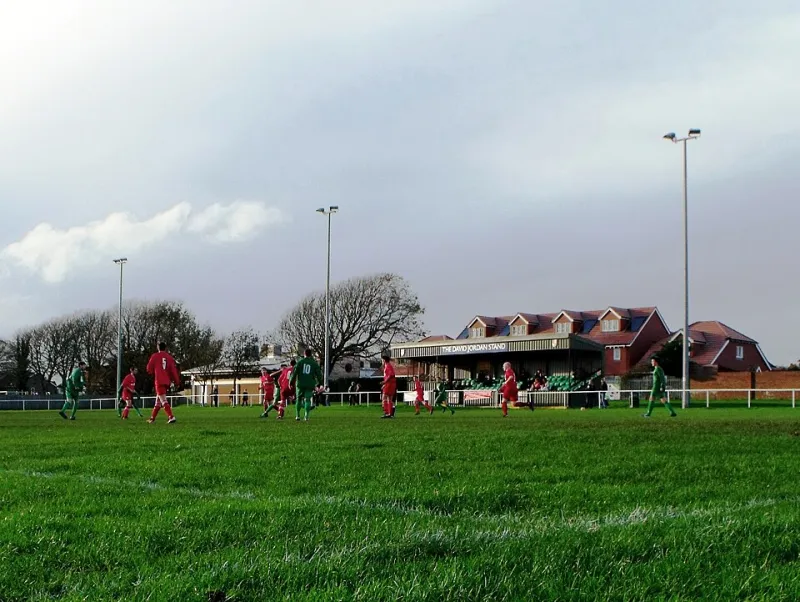
At 10.47 on a Saturday night in Ayrshire, the last glass is lifted from the bar and the door gives a soft click. The car park has thinned to three motors and a stray minibus. Inside, the air is still warm with the smell of pies, mud and whatever was on draft. The match is long over. The second shift is just starting.
Not the players. Not the committee. The folk who stack the chairs, mop the floors, count the takings and turn the lights off. The ones whose Saturday ends when everyone else's has already been replayed on the drive home.
The First Job Is Listening
Big Rab has been the caretaker at this club for longer than most of the first team have been alive. He doesn't rush the last supporters out. He waits. There is a rhythm to closing a clubhouse and it starts with listening: the rise and fall of a conversation near the dartboard, the clatter of a tray, the final round of 'just one more' that everyone knows is a lie.
When the room empties, he walks it. Not with a clipboard, just with his eyes. He reads the building the way a referee reads a game. A chair on its side near the fire exit. A puddle under a leaking radiator. A scarf left on a hook. 'You learn the difference between mess and damage,' he says. 'Mess is just Saturday. Damage is Monday's problem.'
Counting the Night
In the back office, the treasurer is doing the sums. A biscuit tin sits open on the desk, notes flattened under a pint glass, coins sorted into saucers. It is not glamorous work, but it is the night's second scoreline. Raffle tickets. Pie sales. One extra punter who came in at half-time and stayed for the music. The numbers tell you who turned up, who stayed, and whether the boiler fund gets another tenner this week.
'You can tell a lot about a game from the till,' she says. 'A big crowd after a win, sure. But sometimes a heavy loss brings them in too. They want to be somewhere warm with people who understand.' She writes the total in a ledger, circles it, and closes the book. Monday's committee meeting will see it. Nobody else will.
The Lost Property Cupboard
Every Ayrshire clubhouse has one. A cupboard, a box, a bin bag behind the door. Inside: a single astro trainer, a child's waterproof, a scrum cap that has never been claimed, three odd socks and a pair of glasses that somebody is going to miss on Monday morning. The cleaner knows whose they are. She knows most things. She knows the boy who left the glove is the same one who scored the third goal and was too excited to remember his bag. She puts it on the hook by the door with a note.
This is the bit that never makes the match report: the quiet administration of other people's days. The restoring of order. The small acts of remembering.
Mopping as Memory
The mop comes out at 11.20. The same route around the dressing rooms, the same squeak of the bucket wheels, the same mud in the shower drains. The caretaker does not need a radio. He has the game in his head. He saw the second half through the hatch in the kitchen while he was restocking the fridge. He heard the roar for the equaliser. He knows who was limping and who was arguing and who will be in on Tuesday for treatment.
'People think the clubhouse is just a building,' he says, wringing out the mop. 'But it's the place where the game settles. You mop the floor and you hear it all again. The good bits and the daft bits.'
The Monday Standard
By midnight, the chairs are stacked, the tables are wiped, the bins are out and the alarm is set. The last volunteer stands in the car park for a moment, looking back at the pitch. The floodlights are off. The goals are shadows. The clubhouse is dark but it is ready: for Monday's walking football, Tuesday's youth training, Wednesday's committee meeting, Thursday's reserve game.
The clean-up is not a chore. It is a handover. It is the promise that the next person through the door will find the place as they left it, only tidier. In grassroots football, that promise is the whole thing. It is why a semi-pro club can run on volunteers and goodwill and a biscuit tin. It is why the lights can go off on Saturday and come back on for somebody else on Monday.
The applause at full-time is for the players. The clubhouse is kept alive by the mop, the ledger and the last one out. You won't see them on the touchline. But without them, there is no touchline to stand on.