The Ice-Pack Handshake: A Saturday With Ayrshire’s Touchline Medics
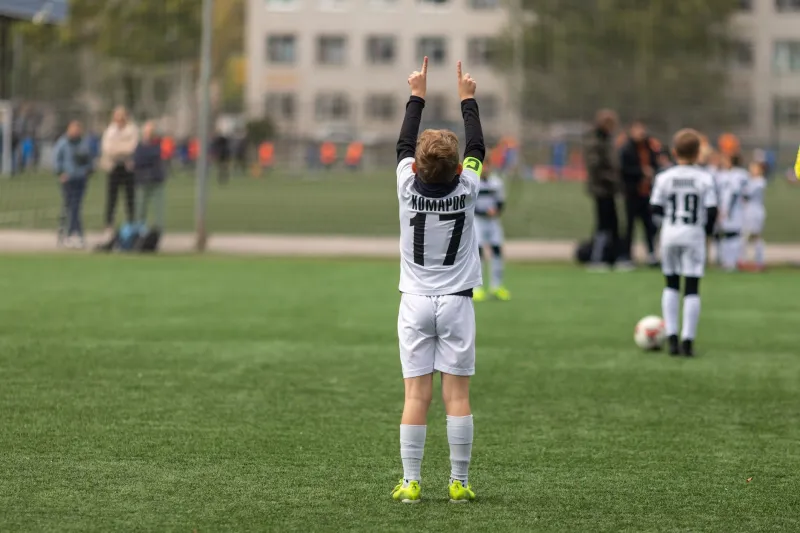
The car park is still half-empty when the treatment table appears. It is 8.40am in South Ayrshire, the grass is holding last night’s rain, and a volunteer in a club hoodie is wrestling a folding table out of a hatchback. On top goes a kit bag, a roll of strapping tape, a bloodied towel from last week and a laminated sheet that nobody hopes to read.
This is the quiet half-hour of grassroots football. The players are still in bed or eating porridge. The referee is checking his boots. The tea urn is clicking. And the touchline medic — often a parent, a retired nurse, a sports therapy student or a club stalwart with a first-aid certificate — is already at work.
The table before the team sheet
By 9.15am, the queue has started. A winger with a stiff ankle. A centre-half who felt his hamstring twang on Thursday. A goalkeeper who wants his wrist taped “just for confidence”. The medic listens, prods, asks the same question three ways and sometimes says no. That is the hardest part of the job: not the blood, not the ice, but the conversation with a player who has paid his subs and wants to play.
“You can usually tell in the first ten seconds whether they’re windmilling or genuinely worried,” says one volunteer, who has covered games across Ayrshire for the best part of a decade. “The quiet ones are the ones to watch. The loud ones will tell you everything. The quiet one will say he’s fine and then go down in the first five minutes.”
Strapping tape is the currency of this world. It is also a small clue to how grassroots football really works. Clubs are expected to provide qualified first-aid cover, an emergency action plan, a defibrillator and access for an ambulance. In practice, that cover is often one person with a bag, a phone and a lot of goodwill. The bag might contain ice packs, bandages, gloves, a foil blanket and a pocket mask. The phone might have no signal. The ambulance might be forty minutes away.
Forty minutes is a long time
That number is not a scare story. On a Saturday morning in Ayrshire, with games stacked across Kilmarnock, Ayr, Irvine, Troon, Saltcoats and the villages in between, emergency services are stretched. A suspected broken leg or a head injury can mean a long wait on a cold pitch while a volunteer keeps the player still, keeps them warm and keeps the crowd back.
“You’re not a paramedic,” says one club first-aider. “You’re a bridge. You keep the person calm, you keep them still, you give the ambulance crew the information they need when they get there. But you also know you’re the only person on that touchline with gloves on.”
The job is not just physical. It is logistical and emotional. Who rings 999? Who fetches the defibrillator? Who moves the other players away? Who speaks to the parents? Who drives the injured player to A&E if the wait stretches and the game has to finish? Those questions are supposed to be answered in a club’s emergency action plan, a document that often lives in a folder and is read once a season. The best clubs rehearse it. The rest hope.
The price of being prepared
Grassroots safety has improved. Defibrillators are more common, often funded by community groups and local businesses. First-aid courses are easier to find. Governing bodies provide templates and guidance. But the gap between guidance and Saturday reality is still wide. A club can own a defibrillator and still struggle to find someone trained to use it every week. A club can have a qualified physio and still lose them to a paying job at a bigger club. A club can tick every box on a form and still rely on one volunteer who is one cold morning away from packing it in.
The financial pressure is real. Paying a qualified medic for every home and away game is beyond most grassroots budgets. Asking a parent to do it for free is not a strategy. Asking a player to pay more subs to cover it is a conversation no committee enjoys. So clubs improvise. They share medics. They send someone on a course. They buy a second ice pack. They write a phone number on a whiteboard.
None of that is a criticism of the volunteers. It is a description of the arithmetic. Grassroots football runs on people who do too much, and the touchline medic is often the person doing the most invisible job on the pitch. They are not there for the result. They are there for the moment after the result goes wrong.
The final whistle
At 4.50pm, the light is going. The treatment table is folded, the bag is zipped, and the medic is answering a text from a player’s mum. The game finished 2-2. There was a twisted knee, a bloody nose and a long stoppage while an ambulance was called for a suspected wrist fracture. The ambulance arrived in thirty-eight minutes. The volunteer stayed with the player until the crew took over, then walked back to the clubhouse to fill in the accident form.
You will not see that in the match report. You will see the goals, the saves, the controversial offside. But the ice-pack handshake — the one between the medic and the player who thought his season was over — is part of every Ayrshire Saturday. It is not glamorous. It is not funded. It is, for now, what keeps the game standing.
If clubs want to keep players safe without pricing volunteers out, the answers are unglamorous too: shared medic pools, funded first-aid training, clearer emergency plans, better pitch access, and a culture where saying “I’m not right” is not a weakness. The volunteers will still turn up. They always do. But they should not have to do it alone.