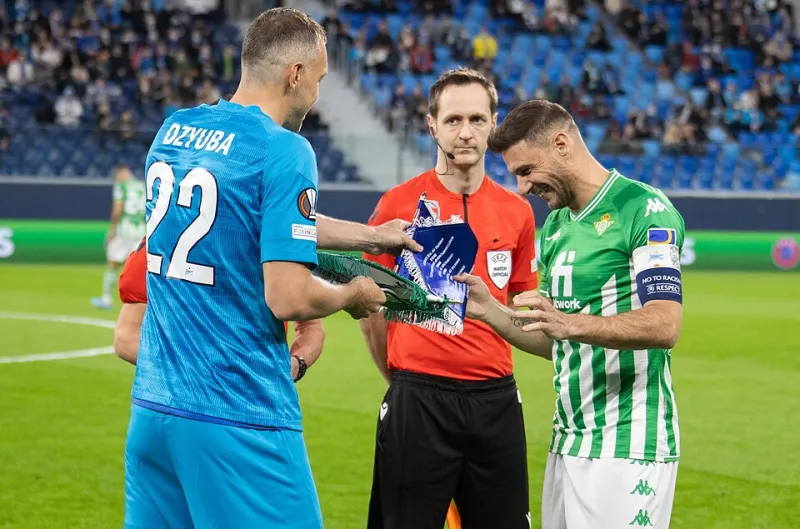
The Half-Hour Handover: Two Badges, One Pitch and the Ayrshire Clubs Making It Work
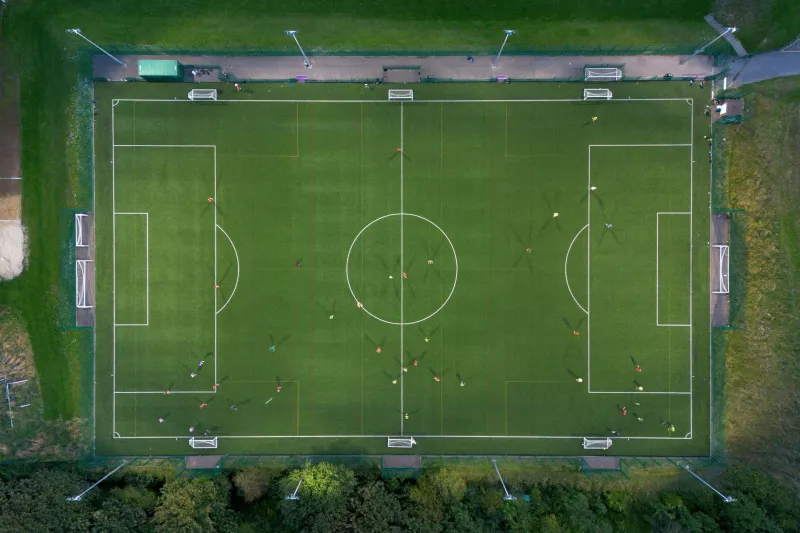
At twenty past one on a damp November Saturday in 2026, the first cars start to drift away from a ground somewhere between Kilmarnock and Irvine. By half past, a different set of players is pulling into the same car park, carrying different kit bags, nodding at the same groundsman. The pitch has not moved. The badge on the clubhouse wall has.
Ground-sharing is one of those arrangements that looks simple on paper and gets complicated the moment someone forgets to unlock the away dressing room. Across Ayrshire, clubs at every level — amateur, youth, semi-pro and the occasional rugby-football crossover — share pitches, pavilions, floodlights and storage cupboards. Some arrangements are formal leases. Others are handshakes renewed every August. All of them depend on a half-hour handover that most supporters never see.
The key that opens two doors
Ask a club secretary about ground-sharing and the first thing they mention is usually not the pitch. It is the keys. One set for the main gate, one for the pavilion, one for the container where the corner flags live. If two clubs are using the same facility, someone has to be the custodian of the padlock. That person becomes a small piece of local infrastructure.
In 2026, with hire fees, energy costs and pitch maintenance still squeezing grassroots budgets, sharing makes obvious sense. A council-owned pitch can host a Saturday amateur side and a Sunday youth setup. A junior club with floodlights can let a neighbouring amateur team train midweek. Some arrangements date back decades, to works teams and church leagues that have long since changed names but left behind a rota and a cupboard full of mismatched teacups.
The unwritten rule is simple: leave the place as you found it, or better. The written rule is usually a text message on a Thursday night asking who is cutting the grass.
Who gets the home dressing room?
This is where ground-sharing gets personal. The home dressing room is not just a room. It is where the team talk happens, where the captain hangs the shirt, where the pre-match playlist is controlled. When two clubs share a ground, the question of who gets the bigger room can rumble on for a season.
Most arrangements settle on a rotation. One club gets the home room for league fixtures, the other for cup ties. If both are at home on the same day — a fixture clash that secretaries spend hours trying to avoid — the club that has been there longest usually wins. Or the club with the most players needing physio. Or the club whose secretary brought the milk.
Players learn the geography quickly. They know which pegs are theirs, which shower runs cold, and which door not to open because it belongs to the other lot. The badge on the door changes. The pegs do not. That small continuity is part of what keeps a shared ground from feeling like a borrowed one.
The tea urn diplomacy
No ground-share survives on fixtures alone. It survives on tea. The urn is often the most contested object in the building, not because anyone wants to own it, but because everyone wants it hot at half-time.
There are unwritten rules here too. If you finish the milk, you replace it. If you use the last tea bag, you add it to the shopping list. If you spill sugar on the counter, you wipe it up before the next club arrives. Volunteer goodwill is not unlimited, and a shared kitchen can turn a friendly arrangement sour faster than a waterlogged pitch.
One groundsman puts it plainly: the pitch is the easy part. The kitchen is where you find out whether two clubs actually get on.
Fixture chess and floodlight maths
Ground-sharing turns the fixture list into a puzzle. Saturday afternoon belongs to one team, Sunday morning to another. Midweek floodlit games need the lights, the meter and someone who knows which switch trips the whole pavilion. In winter, when the weather closes in, both clubs can lose a home game to the same puddle.
The line-painting rota is another quiet test of character. Someone has to mark the pitch before the first game, and someone has to leave it alone before the second. If the lines are faint, both teams hear about it. If the grass is too long, the groundsman hears about it from two committees. The volunteer in the middle often does the job with a flask in one hand and a schedule in the other.
Identity beyond the badge
A shared ground does not mean a shared club. The flags, the sponsor boards, the matchday signage and the pre-match routine all tell players and supporters whose day it is. Some clubs store their identity in a cupboard and wheel it out on matchdays. Others have permanent boards that get covered with a tarpaulin. It is not glamorous, but it works.
For Ayrshire Bulls supporters who travel around the county, it is worth noticing. When you pull into a ground and see two crests on the clubhouse wall, you are looking at a compromise that keeps grassroots football housed. The players know whose dressing room is whose. The volunteers know whose turn it is to unlock. The grass does not care whose badge is on the shirt. The people do.
What the handover teaches the Bulls
The half-hour handover is easy to miss. It happens between full-time and kick-off, when one set of players is walking off and another is walking on. It is a small piece of civil infrastructure, run on text messages, keys and tea.
For anyone following the Bulls around Ayrshire this season, the lesson is straightforward. Respect the handover. Thank the groundsman. Do not assume the home dressing room is yours. And if you finish the milk, replace it. That is how two badges keep one park happy.