Ninety Minutes of Maybe: Running the Line in Ayrshire's Grassroots Game
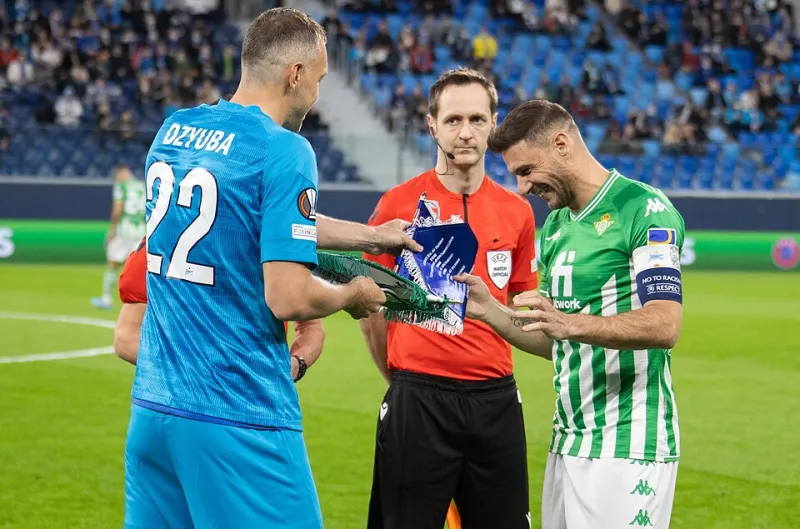
Photo: Vyacheslav Evdokimov / FC Zenit, CC BY-SA 3.0, via Wikimedia Commons
Saturday morning in Ayrshire, and the weather is doing its usual impression of four seasons before lunch. In a club car park, a volunteer is checking a flag bag for the third time. One flag, one spare, a notebook, a whistle that will mostly stay silent. The tea is already stewing in the clubhouse. Somewhere beyond the changing rooms, a referee is wondering whether both clubs have remembered to supply assistants.
This is the quiet bit of matchday. By half past two, the same volunteer will be standing on a touchline, trying to judge whether a forward was half a yard ahead when a pass left a boot. By four o'clock, he will have been called blind, biased and, on a good day, merely useless. By five, he will be helping to put the corner flags away.
For anyone who follows the Bulls, or any Ayrshire club at semi-pro and grassroots level, the club linesman is part of the scenery. He or she is also one of the easiest jobs in local football to take for granted.
The bag by the door
We will call this volunteer Andy. He is not a qualified referee, not in the strict sense. He is a club-appointed assistant, the person a team puts forward to run one half of the touchline with a flag. In many leagues and cup competitions, clubs are expected to provide one. In practice, that expectation lands on the same small group of people week after week: a former player with a bad knee, a parent who got talked into it, a committee member who already does three other jobs before kick-off.
Andy's morning begins with a pitch check and a conversation with the referee. They agree on signals, on how tight offsides will be handled, on who takes which side. It is not a tactical masterclass. It is a ten-minute reminder that the assistant is there to assist, not to take over. Flag up. Wait for the whistle. Give the referee something to work with.
The first half is rarely the problem. The first half is new boots, cold hands and everyone being polite. The second half is where the job grows teeth. A striker times a run, the crowd behind Andy's shoulder times it differently, and a linesman has to decide whether the forward was active or passive, interfering or merely loitering with intent. The law book has an answer. The touchline has several louder ones.
The call that is not a call
One of the most misunderstood parts of the job is that the flag is not a verdict. A club assistant flags for offside, or for the ball leaving the pitch, or for a foul the referee may have missed. The referee still decides. That distinction disappears the moment a decision goes against the home side. To the person shouting from behind the rail, the flag is the decision. To the referee, it is information.
Andy describes the offside call as "ninety minutes of maybe". You watch the last defender, you watch the passer, you watch the forward, and you try to hold all three in your head at once. You learn to delay the flag if the defender is playing the attacker on. You learn that a deflection changes everything. You learn that a raised flag too early can turn a good goal into an argument before the ball has crossed the line.
And you learn to take noise. Ayrshire touchlines are not cruel by nature, but they are close. There is no stand to swallow the shout. A parent, a sub, a committee man with a flask and a strong opinion: everyone is within earshot. The volunteer has to keep watching the game while being told he has cost someone a win, a clean sheet or a coupon.
Learning the line
Recruitment is the hard part. Clubs put out messages on group chats. They ask injured players to help. They ask parents who already stand in the same spot every week. Some clubs are lucky enough to have a pool of three or four; others are ringing round on Friday night. Without club assistants, fixtures become a negotiation. Referees can sometimes cover, but they should not have to. A game without two capable people on the lines is a game with more guesswork in it.
Training does exist, even if it often looks like a Tuesday night in a clubhouse with a laptop and a laws-of-the-game quiz. Local referee associations run sessions. Experienced officials mentor newcomers. The Scottish FA's laws updates filter down, usually via a PDF and a few pointed questions about handball. It is not a full refereeing course, but it is not nothing. The best club assistants learn the same way goalkeepers do: by doing it, by getting one wrong, and by listening to the referee rather than the loudest voice behind the barrier.
For the Bulls and their supporters, the lesson is straightforward. The next time a flag goes up and the groans start, remember that the person holding it probably paid to park, bought a tea and gave up their Saturday to make the match happen. They are not the enemy. They are the reason there is a match to argue about.
Andy's Saturday ends with a 1-1 draw, a disputed goal and a referee who shakes his hand at full-time. The flag goes back in the bag. The notebook gets a line about a tight second-half call. He will be back next week, because someone has to be. In Ayrshire grassroots football, that is not a slogan. It is the fixture list.